Peyronie's disease · PD · Induratio penis plastica
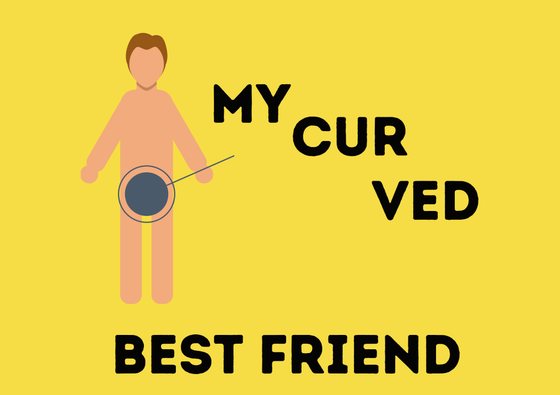
My Curved
Best Friend.
What you can do, starting today.
Self-help for Peyronie's disease (PD): Axel was diagnosed with this disease. What helped him overcome depression, shame and pain and get healthy again, he wrote down in a book. Here you will find all his measures and how to use them. The easiest way to find your way around is the guide.
31
measures, all tried and tested by Axel
13
chapters with everything you need to know
120
keywords in the index from A to Z
Prof. Dr. Frank Sommer
Recommended by the university professor of men's health
Guide · 3 questions · 1 minute
Where are you right now?
31 measures are a lot, especially at the beginning. Answer three short questions and you get your personal starting plan with the five measures that suit you best right now.
How long has this been on your mind?
Frequently asked questions
What men with PD really want to know.
Short, honest answers. Each one leads you to the matching measure or chapter in the book.
My penis is curved. Am I ill?
Not necessarily. Many men have had a curved penis since birth. It has been the same since puberty, does not hurt and is usually no cause for concern. It is different if the penis bends suddenly or newly, you can feel a hard lump, or erections hurt. Then Peyronie's disease may be behind it, and you should have it checked by a urologist. More on this in the book on page 4.
What is Peyronie's disease (PD)?
Peyronie's disease, also called induratio penis plastica (IPP), is a connective tissue disorder of the penis. A scar plate, the plaque, forms in the firm sheath around the erectile bodies. It does not stretch during an erection, so the penis bends. Pain, shortening or erection problems often come with it.
Is Peyronie's disease dangerous or contagious?
No. Peyronie's disease is benign and not contagious. But it is more common than most people think: studies estimate that several percent of all men are affected. The biggest danger is often in the head. More than half of the men affected struggle with depressive phases.
Will the curvature go away?
That is different for every man. In some, the curve improves on its own, in many it stays the same after the active phase, in some it increases. What you can influence: how you live with it, how your mind is doing and how healthy your body is. Axel has made peace with the curve and considers himself healthy today.
How long does the acute phase last?
Typically six to 18 months. During this time the curve can still change, and erections often hurt. After that, the disease settles down in most men. Counting waiting times for appointments and treatments, the topic often occupies men for one to four years. Use this time for yourself.
What can I do myself?
Much more than most people think. Axel tried 31 measures: from talking to his partner, nutrition and blood sugar, friction massage and pelvic floor training to forest bathing and humor. None of them is a miracle cure. Together they helped him avoid surgery, depression and erectile dysfunction.
Can I still have sex?
Yes, if it doesn't hurt and the curve allows it. Caution matters: better avoid positions in which the penis can buckle. And it doesn't always have to be sex. Closeness, caressing and massages count just as much. Withdrawing, on the other hand, makes everything worse.
Does diet help with Peyronie's disease?
Studies show a link between Peyronie's disease, diabetes and insulin resistance. There is no evidence that a diet dissolves the plaque. Still, for Axel the change in diet played the biggest part in his recovery: less sugar, the right order when eating, a walk after meals and a blood glucose sensor to check.
What medicines are there?
It depends on where you live. In the US, injections with collagenase (Xiaflex) are approved for adults with a palpable plaque and a curve of at least 30 degrees. In the EU the manufacturer withdrew this medicine from the market in 2020. Tablets such as Potaba or pentoxifylline are also used, but their effect is limited, and the American Urological Association advises against several oral supplements such as vitamin E. All of these require a doctor. Axel was prescribed Potaba and tadalafil and sees them as one building block among many.
Do I need surgery?
As a rule, there is no surgery during the acute phase. Surgery only becomes an option once the disease has settled and the curve makes sex impossible. Whether that applies to you is something you decide with your urologist. Many men cope well without surgery.
How do I talk to my partner about it?
Openly, honestly and in a quiet place. Inform yourself beforehand, express your fears, listen and plan the next steps together. Don't be afraid of professional help. Axel first dealt with everything on his own and says today: a mistake.
I feel down. Is that normal?
Yes. More than half of all men with Peyronie's disease suffer from depressive moods. That is not a sign of weakness but part of the disease. Talk to someone, and get help if it gets too dark. In the US and Canada you can call or text 988, in the UK and Ireland the Samaritans are available on 116 123, day and night and free of charge. For other countries: findahelpline.com.
When should I see a doctor?
As soon as you feel a hard lump, the penis bends in a new way or erections hurt. The earlier the phase is determined, the better you can plan. A loud crack during sex with sudden loss of erection and swelling belongs in the emergency room immediately: it may be a penile fracture.
Can I prevent Peyronie's disease or a relapse?
There is no guaranteed protection, and Peyronie's disease can come back even after it has settled. But you can lower the risks: caution during sex and sports, condoms, healthy food, sleep and exercise, no smoking, little alcohol, well-controlled blood sugar. Chapter 13 sums up twelve areas.
Who is behind this site?
Axel Westerwelle developed Peyronie's disease at the beginning of 2023. His notes became the 272-page workbook “My Curved Best Friend”, recommended by Prof. Dr. Frank Sommer, the first university professor of men's health. This site summarizes the measures and chapters of the book free of charge. It does not replace medical advice.
Foreword by the author
You can do much more
than you think.
In the first months after the diagnosis, Axel sometimes cried, that is how bad he felt. That changed when he started to take his fate into his own hands. Like so many others with PD, he began researching online. And found that there was no holistic approach, only the few purely medical answers to the disease, such as shockwave therapy.
He made a list of many small measures. He knew there was no single miracle cure, and that the sheer number of ideas would have to bring the breakthrough. His body slowly recovered. His conclusion: he escaped surgery, depression and erectile dysfunction and made peace with the disease.
This website is in no way a substitute for your urologist. It is for the time in between and afterwards. For support. For your own motivation that it can work. For the weeks and months between the (few) doctor's appointments, when you would otherwise only brood.
“More than just a book, it is a friend, an advisor and a testament to human resilience.”
Podcast · in English
My life with the curvature
Prefer to listen? In his podcast Axel talks openly about living with Peyronie's disease.
Pages 18–19 · All results at a glance
This is what I used to fight Peyronie's.
31 measures.
In the book they appear as a short list. Here every measure gets its explanation: what Axel did and what your first step can look like. Tap a line.
31 measures
What Axel did
He gave it a name, drew it and hung the sentence “Your penis is not to blame” on the wall.
Your first step
Write the sentence “My penis is not to blame” by hand.
What Axel did
Comedy, books, films, cartoons. Laughter releases endorphins and raises the pain threshold.
Your first step
Plan something today that is sure to make you laugh.
What Axel did
More than half of all men with Peyronie's disease suffer from depression. Axel did not push this away but accepted it as part of the disease.
Your first step
Write down how you really feel today. And get help if it gets too dark.
What Axel did
At first he dealt with almost everything on his own. A mistake, he says today. The 7-step guide helped.
Your first step
Find a quiet place and a time when the two of you will not be disturbed.
What Axel did
His best friend was the second person to find out. He cried while telling him, and it felt damn good.
Your first step
Write down one name of someone you can imagine having this talk with.
What Axel did
One or two minutes every evening: hands on, ask the brain for help, stroke three times. For more than a year.
Your first step
Try the evening ritual for one week.
What Axel did
Online you only see extreme cases. They have nothing to do with your own course, but you cannot get them out of your head.
Your first step
Make a rule: forums yes, pictures no.
What Axel did
Capturing everything that makes him happy with an instant camera and gluing the photos into the book.
Your first step
Take a photo of something beautiful today.
What Axel did
Regularly into the forest, alone and without a phone. Phytoncides have been shown to lower the stress hormone cortisol.
Your first step
Plan five visits to nature and put them in your calendar.
What Axel did
Places, dates, experiences. What happens on the first day, what on the days after?
Your first step
After your next visit, write three sentences about what you felt.
What Axel did
With a sensor on his arm he saw minute by minute how his body reacts to food, exercise, sleep and stress.
Your first step
Eat one meal today in this order: vegetables, protein, carbohydrates.
What Axel did
One hour of consultation at a TCM center, then herbal tea made from eleven herbs every day for three months.
Your first step
Look for a reputable TCM practice. Discuss herbs with your doctor, they can interact with medication.
What Axel did
Fewer “fillers” like bread, rice and pasta, no juice, more nuts and cottage cheese. 21 recommendations, each with a fixed start date.
Your first step
Pick one of the 21 recommendations and set a start date.
What Axel did
Laughing about the disease gives body, soul and brain time to breathe.
Your first step
Write a joke about Peyronie's. The worse, the better.
What Axel did
In the middle of the acute phase he wrote a poem and a short story. They became the starting point of the book.
Your first step
Write four lines about your journey. Rhyming is allowed, not required.
What Axel did
Gently pull and massage 33 times, always when peeing and in the shower. Only when flaccid.
Your first step
Ask your urologist about the right technique and start with a few minutes a day.
What Axel did
Strength training with two rest days in between. He got stronger, lost fat and liked his reflection in the mirror again.
Your first step
Set three fixed training dates for next week.
What Axel did
That is what Prof. Frank Sommer calls the pelvic floor. It anchors the muscles that support an erection.
Your first step
Stand up more often, sit up straight, lift with your legs.
What Axel did
Three exercises: standing pelvic tilt, pelvic lift, inclined plane. Note the date and how often.
Your first step
Do the first of the three exercises today and write it down.
What Axel did
Caressing, bathing together, sauna, massages. Taking away the pressure that an erection has to work.
Your first step
Suggest an evening without a goal to your partner, just closeness.
What Axel did
Looking at his own chest, arms and legs instead of only at his penis. And telling himself: “Hey, not bad.”
Your first step
Look at yourself in the mirror today and find three things you like.
What Axel did
The trick: you have so many other parts of your body that deserve attention. That way the penis loses its dominance.
Your first step
Write down what you like about your body, apart from him.
What Axel did
Prescribed by Prof. Sommer together with tadalafil. Axel sees it as one of many building blocks of his recovery.
Your first step
Talk to your urologist about medical options. Prescription only.
What Axel did
Fantasies keep sexual interest alive and shift the focus away from penetration alone.
Your first step
Talk to each other about one fantasy. Just talk about it.
What Axel did
Withdrawing makes everything worse. Both for you and for your partner.
Your first step
Write down the sentence: “I will not withdraw into solitude.”
What Axel did
First alone, then together. Curved ones are everywhere there. Sex is a lot of brain.
Your first step
Write down what appeals to you right now and come back to it later.
What Axel did
In a protected space he saw many curved penises and learned to show himself.
Your first step
Look up a sauna or a clothing-optional club.
What Axel did
Twelve areas, from caution during sex and condoms to stress control. Each one a piece of the puzzle.
Your first step
Read the twelve areas and mark three you will start with right away.
What Axel did
A coin-sized sensor on the arm, an app, a reading every minute. For Axel a must for everyone with PD.
Your first step
Ask your pharmacist or family doctor about a sensor you can try.
What Axel did
Gaining knowledge, talking openly, knowing in advance where to find help if things get serious.
Your first step
Save the contact of one place where you can get psychological help.
What Axel did
Handwriting anchors thoughts more firmly in the brain than typing. It turned into a 272-page workbook and a diary.
Your first step
Buy a notebook or a pen you enjoy using.
Pages 16–17 · Contents
13 chapters.
One path.
From the first shock to prevention. Each chapter opens with its key insights, the related measures and the hands-on task from the book.
Pages 20–22 · Index
120 keywords
from A to Z.
Looking for something specific, like blood sugar, condoms or forest bathing? Tap a keyword and the matching chapter opens. The page number takes you to the right place in the book.
120 of 120
A
B
C
D
E
F
G
H
I
J
K
L
M
N
O
P
Q
R
S
T
V
W
Pages 24–26 · A (short) medical digression
What happens in your body
What it is
Scar tissue, the plaque, forms in the firm sheath around the erectile bodies. It does not stretch during an erection, and the penis bends. The disease is named after François Gigot de La Peyronie, who described it in 1743. The exact cause is still unclear today.
Possible causes
- Repeated micro-injuries, for example during sex or sports
- Family predisposition
- Other connective tissue disorders such as Dupuytren's contracture
Typical signs
- Curvature, sometimes more than 90 degrees
- Pain at rest or during erection
- Erection problems, shortening
- A hard lump you can feel under the skin
What medicine offers
Tablets such as Potaba or pentoxifylline, injections into the plaque, shockwaves, traction devices and surgery. In the US, collagenase injections (Xiaflex) are approved for a palpable plaque and a curve of at least 30 degrees; in the EU this medicine has not been on the market since 2020. The effect of tablets is limited, shockwaves mainly ease pain, traction can slightly reduce the curve. Surgery only becomes an option once the disease has settled.
Important
Have a urologist make the diagnosis and determine the phase. Everything on this site is Axel's personal experience and complements medical treatment, it does not replace it. If dark thoughts take hold: in the US and Canada call or text 988, in the UK and Ireland call the Samaritans on 116 123, day and night and free of charge. Other countries: findahelpline.com.
Take part · Your day
Don't just read.
Do.
The book wants you to write, draw and glue in it, because handwriting sticks better in your memory. For on the go, here is a small digital version: tick off what you did today for yourself and for him. Your entries stay in your browser only.
History · Pain
Page 251 · Set your priorities
Not everything at once
At the end of the book there is an annual plan: one chapter per row, one month per column. Pick two or three priorities for the coming months instead of trying everything at once.
The book · 272 pages
Everything in detail
and room to write in.

Here on the web you will find a lot of information and the most important things you need to know. The book tells Axel's whole story and is built as a workbook, with plenty of room for your ideas, thoughts and feelings. The words you write yourself give you superpowers and can support your recovery for the long term.
English · ISBN 978-3-911401-10-4
My Curved Best Friend
Translated from German and proofread by a native speaker.
amazon.comMore Amazon stores
The second book
The diary →
One year, four pages per week, with nutrition tips
Podcast
My life with the curvature →
Spotify and Apple Podcasts
Ask Axel
Let me help you →
Questions and newsletter at peyronie.online
Questions, feedback or a personal PD poem? Write to Axel: axel@peyronie.online